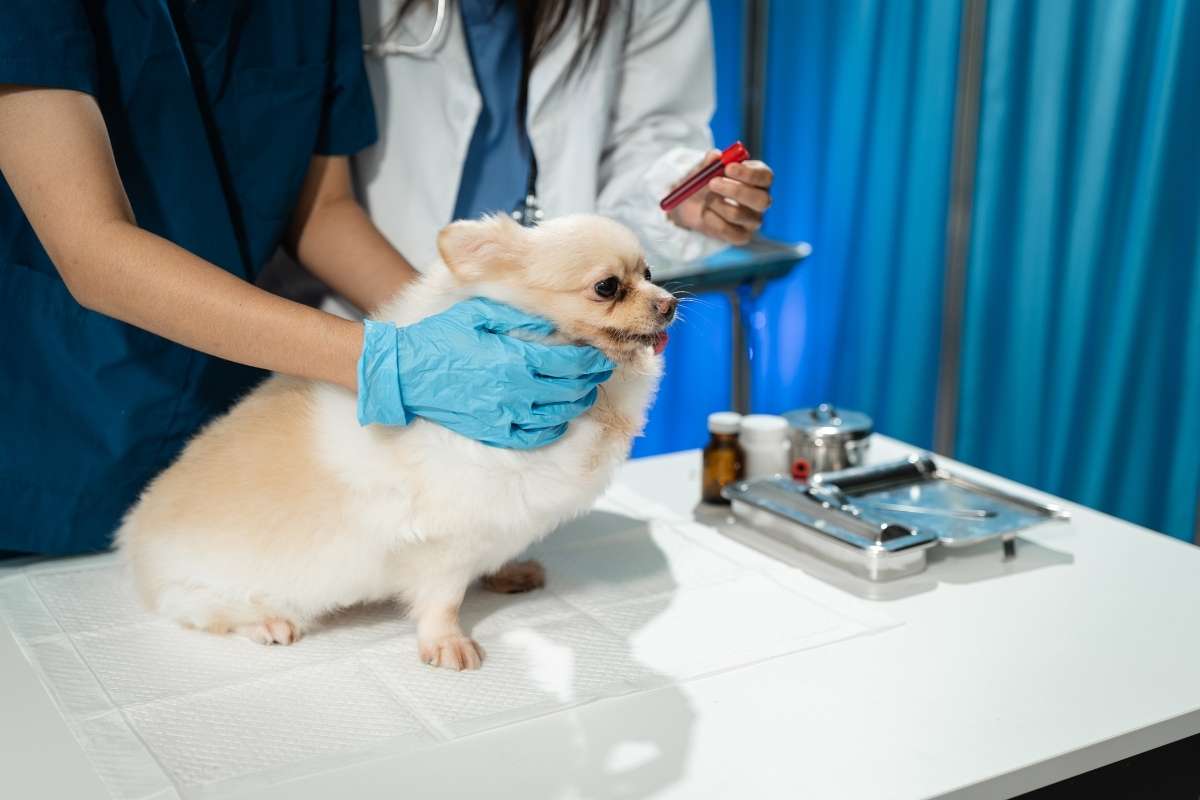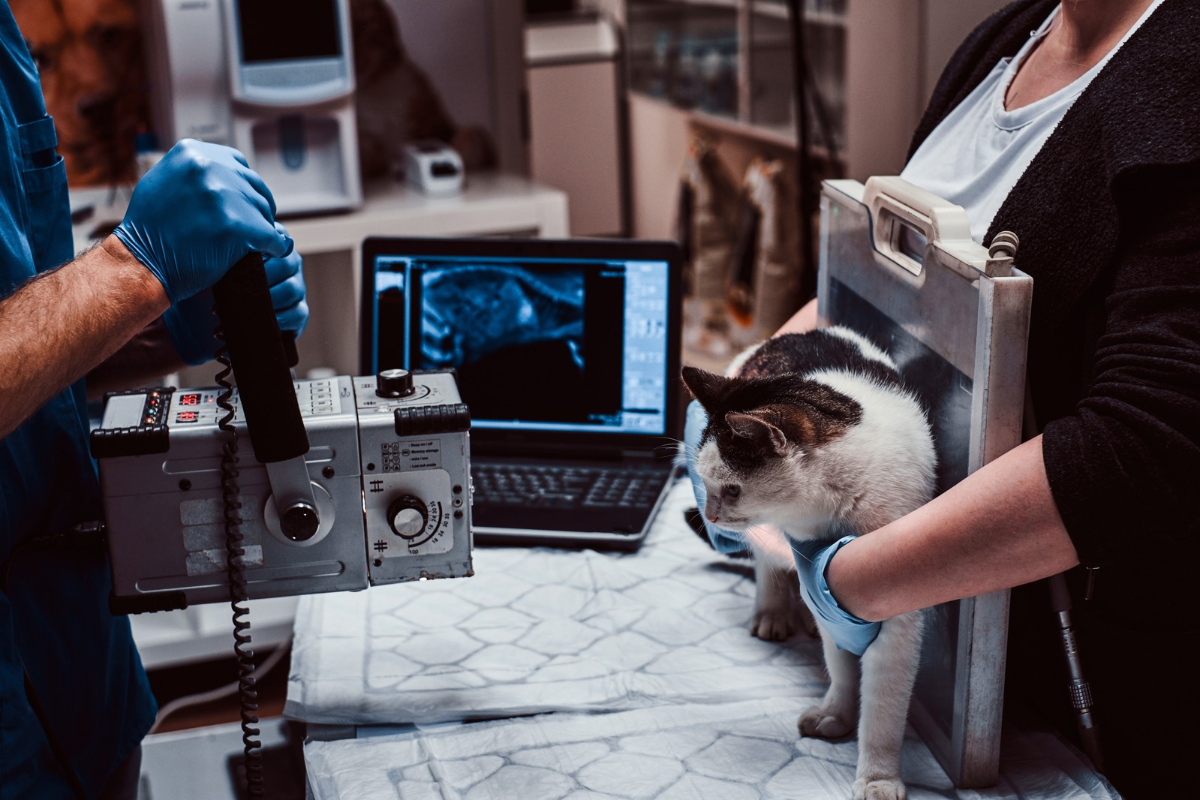
When a dog or cat experiences unexplained pain, difficulty walking, coughing, or digestive problems, identifying the underlying cause is essential for proper treatment. Veterinary X-rays, also known as radiographs, help veterinarians examine structures inside the body without surgery. As an important part of diagnostic pet care, they provide valuable information about bones, joints, the chest, and abdominal organs.
At Farmington Veterinary Hospital, on-site X-ray capabilities help veterinarians investigate potential health concerns and make informed decisions about a pet’s medical care. Understanding what these images can reveal helps pet owners recognize why radiographs may be recommended during an examination.
What Are Veterinary X-Rays?
Veterinary X-rays are diagnostic imaging tests that use controlled amounts of radiation to create images of internal body structures. Different tissues absorb radiation differently, allowing veterinarians to distinguish bones, air-filled spaces, and certain soft tissue structures.
The procedure is generally quick and painless. However, pets must remain still to produce clear images. Some animals may require mild sedation if they are anxious, uncomfortable, or unable to maintain the necessary position.
What Can X-Rays Detect in Dogs and Cats?
X-rays can help identify several conditions affecting a pet’s health. The findings depend on the body area being examined and the nature of the suspected problem.
1. Bone Fractures and Joint Problems
Radiographs are commonly used to investigate injuries involving bones and joints. They can help identify:
- Broken or fractured bones following falls or accidents.
- Joint abnormalities and dislocations.
- Signs of arthritis and degenerative joint changes.
- Bone deformities and certain bone diseases.
If a pet limps, avoids putting weight on a leg, or shows discomfort while moving, X-rays can help determine whether a skeletal problem is responsible.
2. Heart and Lung Conditions
Chest X-rays allow veterinarians to evaluate the heart, lungs, and surrounding structures. They may reveal:
- An enlarged heart.
- Fluid accumulation in or around the lungs.
- Certain lung infections and inflammatory changes.
- Abnormal masses within the chest.
- Changes associated with some respiratory conditions.
These findings can help investigate symptoms such as persistent coughing, rapid breathing, or reduced exercise tolerance.
3. Digestive Problems and Swallowed Objects
Dogs and cats sometimes swallow objects that their digestive systems cannot safely process. Depending on the object’s material and location, abdominal X-rays may help identify foreign objects, unusual gas patterns, and intestinal obstructions.
Radiographs can also help assess organ size and detect certain abdominal abnormalities. This can be particularly useful when pets experience repeated vomiting, abdominal discomfort, or loss of appetite.
4. Bladder Stones and Urinary Problems
Some bladder and urinary stones are visible on X-rays. These images can help veterinarians identify their location, number, and approximate size.
If a pet frequently urinates, strains while urinating, or has blood in the urine, diagnostic imaging may be recommended alongside urine testing to investigate the cause.
5. Dental and Oral Health Problems
Dental X-rays reveal structures beneath the gumline that cannot be evaluated through a regular visual examination. They can help detect damaged tooth roots, hidden infections, bone loss, and abnormalities that may require dental treatment.
These images are especially valuable when determining whether a tooth needs extraction.
When Does Your Pet Need an X-Ray?
Your veterinarian may recommend radiographs when your pet experiences:
- Persistent limping or unexplained pain.
- Coughing or breathing difficulties.
- Repeated vomiting or abdominal swelling.
- Difficulty urinating.
- Suspected injuries or swallowed objects.
- Unexplained changes in appetite or activity.
X-rays are not always sufficient to confirm a diagnosis. Depending on the findings, additional tests such as bloodwork, ultrasound, or advanced imaging may be necessary.
What Should Pet Owners Expect During an X-Ray?
Before the procedure, your veterinarian will examine your pet and identify the area that needs imaging. Your pet will then be positioned carefully so the necessary views can be obtained.
Most routine radiographs do not require sedation, although individual circumstances may make it necessary. Veterinary professionals follow radiation safety procedures, and exposure is kept as low as reasonably achievable.
After the images are obtained, your veterinarian reviews the findings and discusses whether further testing or treatment is appropriate.
Supporting Your Pet’s Health Through Veterinary Imaging
Recognizing health problems early can help veterinarians recommend appropriate treatment and reduce the risk of complications. X-rays provide valuable insights into conditions that may not be apparent during a physical examination.
At Farmington Veterinary Hospital, on-site radiology services support the evaluation of various medical concerns in dogs and cats. If your pet shows signs of pain, mobility changes, or unexplained illness, schedule an appointment to discuss whether diagnostic imaging is appropriate.
Pet owners seeking reliable veterinary imaging and personalized medical guidance in Farmington, NY, can contact the hospital to discuss their companion’s diagnostic and treatment needs.
Frequently Asked Questions:
Q1. Why does my dog or cat need an X-ray?
Ans: Dogs and cats may need X-rays to investigate fractures, joint problems, respiratory conditions, swallowed objects, bladder stones, or other internal abnormalities. Farmington Veterinary Hospital offers on-site X-ray services to help evaluate these concerns and guide appropriate treatment.
Q2. Are veterinary X-rays safe for dogs and cats?
Ans: Yes. Veterinary X-rays are generally safe when performed by trained professionals using appropriate radiation safety procedures. The radiation exposure is kept as low as reasonably achievable while obtaining useful diagnostic images. Farmington Veterinary Hospital uses radiographic imaging to support accurate evaluation of pets’ health concerns.
Q3. Can X-rays detect swallowed objects in dogs and cats?
Ans: Yes. X-rays can help identify certain swallowed objects and potential intestinal obstructions. However, some materials may not appear clearly on radiographs, so additional imaging may be necessary. Farmington Veterinary Hospital can evaluate digestive concerns and determine whether further diagnostic testing is needed.
Q4. Can an X-ray detect bladder stones in pets?
Ans: Yes. Many bladder stones are visible on radiographs, allowing veterinarians to assess their location, number, and approximate size. Farmington Veterinary Hospital provides on-site X-ray services to help investigate urinary concerns and determine appropriate next steps.
Q5. Does my pet need sedation during an X-ray?
Ans: Not always. Most routine X-rays can be performed without sedation. However, sedation may be recommended if a pet is anxious, uncomfortable, or unable to remain still. Farmington Veterinary Hospital evaluates each pet’s condition and determines the most appropriate approach for obtaining clear images.
Q6. When should I schedule an X-ray for my pet?
Ans: Consider a veterinary examination if your pet experiences unexplained limping, persistent coughing, repeated vomiting, abdominal discomfort, or difficulty urinating. Farmington Veterinary Hospital offers on-site radiology services to help investigate these symptoms. Schedule an appointment if your pet needs an evaluation or diagnostic imaging.