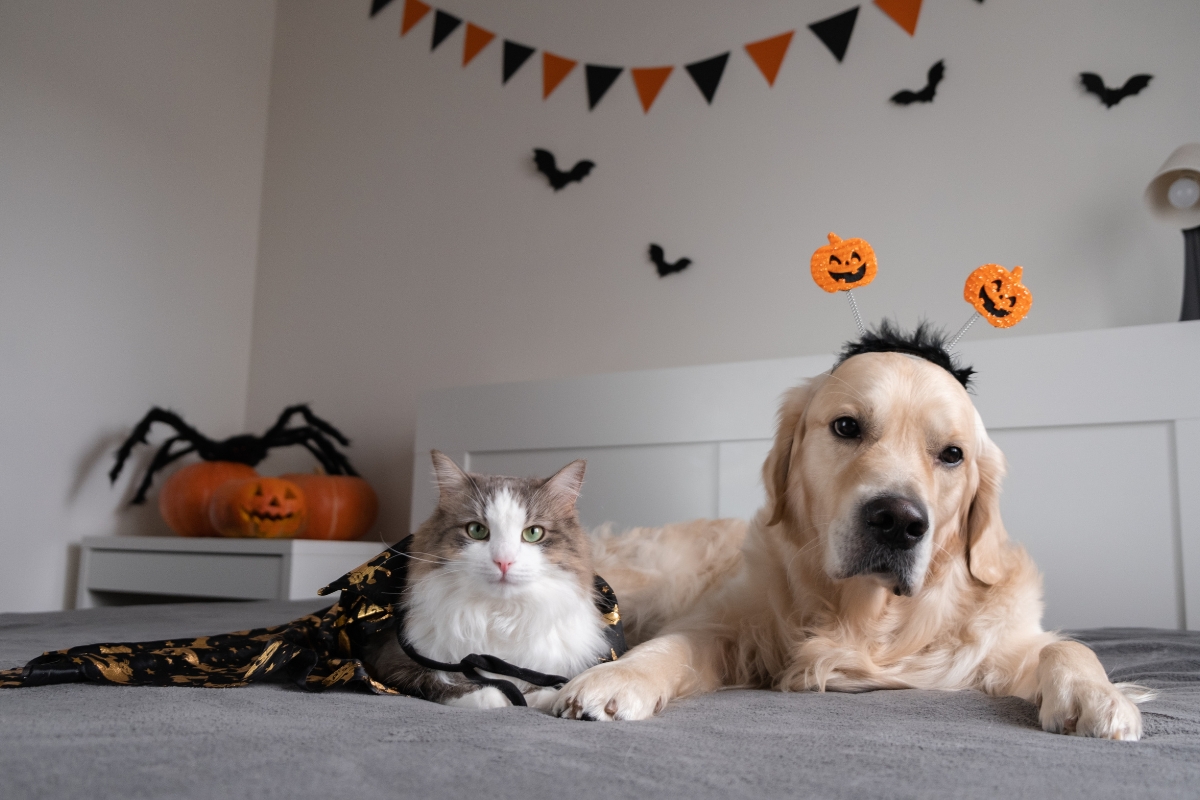
Pets can respond differently to unfamiliar sounds, masks, costumes, children, and repeated doorbell activity. One frightened animal may also affect another’s behavior.
Excitement can contribute to barking, chasing, hiding, competition over food, or conflict between pets. In a busy household, it may also be harder to notice which pet swallowed something or escaped through an open door.
Planning ahead reduces these risks.
8 Halloween Safety Tips for Homes With Multiple Pets
1. Create Separate Safe Spaces Before Visitors Arrive
Do not assume every pet will feel comfortable staying together. Set up quiet areas with familiar bedding, water, litter boxes when appropriate, and safe enrichment.
Pets that become tense around one another when excited may need separate rooms. Keeping animals away from the entrance also reduces escape opportunities during trick-or-treating.
2. Lock Halloween Candy Away From Every Pet
Chocolate can be dangerous to dogs and cats, while xylitol in some sugar-free products can cause serious poisoning in dogs. Candy wrappers can also create gastrointestinal problems if swallowed.
In multi-pet homes, use a closed cabinet rather than simply placing candy on a table. Check children’s rooms, treat bags, and areas where candy may have been dropped after celebrations.
3. Feed Pets Separately During Halloween Activities
Excitement can change normal household behavior. A pet that usually shares space peacefully may guard food, chews, or toys when stressed.
Give treats and meals in controlled areas. This also helps you know exactly what each animal consumed.
4. Prevent Door-Dashing Before Trick-or-Treating Starts
Repeatedly opening the front door creates an escape risk. Secure dogs and cats before the first visitors arrive.
Check that identification information is current. Microchip identification can also help reunite lost pets with their families.
5. Keep Costumes Optional and Supervised
Not every pet enjoys wearing clothing. A costume should never interfere with breathing, vision, hearing, or normal movement. Loose pieces can also become chewing or choking hazards.
Watch each animal individually. Remove the costume if you notice freezing, repeated attempts to escape it, unusual agitation, or difficulty moving.
6. Secure Decorations Throughout the House
Cats may climb to decorations that seem unreachable, while puppies may chew cords or small plastic pieces. Open flames can cause burns or fires if knocked over.
Choose secure decorations and keep electrical cords out of reach. After parties, check floors for wrappers, costume pieces, and other objects pets could swallow.
7. Watch for Stress Between Pets
Halloween stress is not always obvious. Hiding, pacing, trembling, excessive vocalization, attempts to escape, or unusual irritability can signal distress.
A frightened pet may redirect its frustration toward another animal. Separate pets if tension develops rather than forcing them to remain together.
If distress becomes severe, sudden, or difficult to manage, call our animal hospital now for guidance. Do not give human medications or alter prescribed medication without veterinary direction.
8. Know Which Signs Need Prompt Attention
Mild nervousness that improves once the house becomes quiet may be monitored. Persistent vomiting, diarrhea, appetite changes, or unusual behavior may justify a medical examination.
Suspected toxin ingestion, seizures, collapse, breathing difficulty, severe weakness, or significant injury can require prompt emergency attention. Do not wait for symptoms if you know a pet swallowed a potentially toxic substance.
Make Halloween Safer for Every Pet in Your Home
A little preparation can help multi-pet families enjoy Halloween without unnecessary risks. Consider each animal’s temperament, secure possible hazards, and have a plan for unexpected problems.
If your dog, cat, or other companion becomes sick, injured, or unusually distressed, Farmington Veterinary Hospital provides medical care and diagnostic services for pets in Farmington and surrounding communities. Speak with our veterinarian about concerning symptoms or Halloween-related health problems. Call our hospital at (585) 398-2058 for guidance or to arrange appropriate care.
Frequently Asked Questions
Q1. Should I separate my pets during trick-or-treating?
Ans. It depends on their behavior. Pets that become fearful, territorial, or overly excited may benefit from separate quiet spaces. Familiar bedding, water, and appropriate enrichment can help reduce stimulation.
Q2. What should I do if one of my pets eats Halloween candy?
Ans. Remove access to the remaining candy and determine what was eaten, if possible. Do not induce vomiting unless directed by a veterinary professional. Farmington Veterinary Hospital can provide guidance during regular hours, while its website also lists after-hours emergency resources.
Q3. Can Halloween stress cause pets in the same home to fight?
Ans. Stress and heightened excitement can contribute to tension between animals. Separate pets if you notice guarding, growling, chasing, or escalating agitation. Farmington Veterinary Hospital offers behavioral counseling for concerns involving aggression and other behavioral problems.
Q4. How can I stop my cat or dog from escaping on Halloween?
Ans. Secure pets away from frequently opened doors before visitors arrive. Check collars and identification information beforehand. Microchipping provides another form of permanent identification if a pet becomes lost.
Q5. When is Halloween anxiety serious enough for medical attention?
Ans. Seek advice when anxiety is severe, persistent, causes self-injury, or creates dangerous behavior. Farmington Veterinary Hospital can assess health or behavioral concerns and help determine appropriate next steps.
Q6. What Halloween symptoms could indicate an emergency?
Ans. Collapse, seizures, breathing problems, severe weakness, significant injury, or known toxin exposure may require immediate attention. Contact an appropriate emergency service promptly rather than waiting for symptoms to worsen.