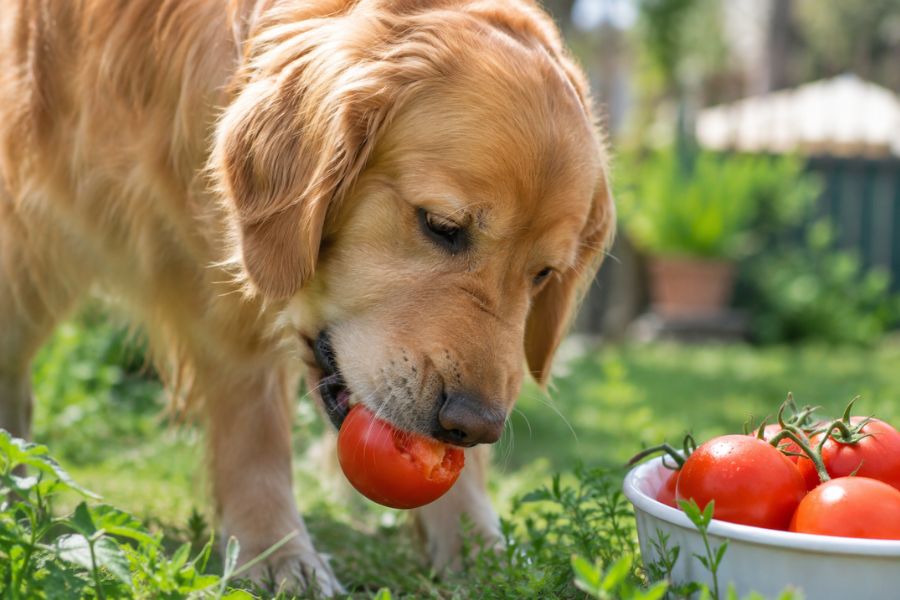
Dogs are naturally curious, and many will happily investigate food left within reach. If your dog eats a tomato, you may immediately wonder whether it is safe or whether you need to contact a veterinarian. The answer depends on the type of tomato, how much your dog ate, and which part of the plant was consumed.
A ripe, red tomato is generally less concerning than the green parts of the tomato plant. However, unripe tomatoes, stems, and leaves contain higher levels of naturally occurring compounds that can cause problems if a dog consumes enough of them. When in doubt, contacting a veterinary hospital can help you determine whether your dog needs monitoring or an examination.
Can Dogs Eat Tomatoes?
Small amounts of ripe, red tomato flesh are generally considered low risk for most healthy dogs. However, tomatoes should not become a major part of a dog’s diet.
The greatest concern involves unripe green tomatoes and the stems and leaves of the tomato plant. These parts contain higher concentrations of compounds that may cause gastrointestinal or other symptoms when eaten in sufficient quantities.
Therefore, if your dog grabs a piece of ripe tomato from your plate, there is usually less cause for concern than if your dog chews on an entire tomato plant.
What Happens If a Dog Eats a Ripe Tomato?
If a dog eats a small amount of ripe tomato flesh, it may experience no noticeable effects. Some dogs, however, may develop mild digestive upset depending on their individual sensitivity.
Possible signs include:
- Mild vomiting
- Loose stool
- Gas
- Stomach discomfort
- Reduced appetite for a short period
Keep an eye on your dog and provide access to fresh water. If symptoms become persistent, severe, or unusual for your pet, contact your veterinarian.
What If a Dog Eats a Green Tomato?
Green, unripe tomatoes deserve more attention because they contain higher concentrations of tomatine than ripe tomatoes.
The risk depends on factors such as the dog’s size, the amount consumed, and whether the dog ate only the fruit or also consumed stems and leaves.
Potential symptoms may include:
- Vomiting
- Diarrhea
- Drooling
- Loss of appetite
- Abdominal discomfort
- Weakness
- Lethargy
If your dog consumes a large quantity of green tomatoes or tomato plant material, contact a veterinarian promptly for advice.
What If a Dog Eats Tomato Leaves or Stems?
Tomato leaves and stems can pose a greater concern than a small amount of ripe tomato flesh. These green parts contain higher concentrations of potentially harmful compounds.
If your dog has eaten part of a tomato plant, do not assume that no symptoms will develop simply because the dog currently appears normal. Monitor closely and contact your veterinary team for guidance, particularly if your dog consumed a significant amount.
Avoid attempting to make your dog vomit unless a veterinarian specifically instructs you to do so. Some home remedies can cause additional harm.
Signs to Watch For After Your Dog Eats a Tomato
The symptoms that develop, if any, can vary according to the amount and type of tomato material consumed.
Watch your dog for:
Digestive Symptoms
Vomiting, diarrhea, excessive gas, or abdominal discomfort may indicate gastrointestinal irritation.
Changes in Behavior
Lethargy, weakness, restlessness, or unusual behavior can signal that your dog is not feeling well.
Drooling or Appetite Changes
Excessive drooling or refusing food may indicate nausea, mouth discomfort, or another problem that deserves attention.
More Serious Signs
If your dog develops significant weakness, difficulty breathing, tremors, seizures, collapse, or severe vomiting, seek immediate veterinary attention.
What Should You Do If Your Dog Eats a Tomato?
First, determine what your dog consumed. If possible, identify whether it was:
- A small piece of ripe tomato
- A whole ripe tomato
- A green tomato
- Tomato leaves or stems
- A prepared tomato product
Next, estimate how much your dog ate and note when the incident occurred. Your dog’s size, age, health history, and the amount consumed can all affect the level of concern.
Do not give your dog medications or induce vomiting unless directed by a veterinary professional.
If you are unsure about the type or amount consumed, contacting your veterinarian is the safest way to determine the appropriate next step.
Are Tomato-Based Foods Safe for Dogs?
Tomato sauce, soup, pizza sauce, and other prepared foods require additional caution. The tomato itself may not be the only ingredient of concern.
Many prepared foods contain ingredients such as onions, garlic, excessive salt, or seasonings that are not appropriate for dogs. Some sauces may also contain high amounts of fat or sugar.
For this reason, avoid intentionally feeding dogs processed tomato-based foods unless you know the ingredients are appropriate for them.
How to Prevent Tomato-Related Problems
Prevention is easier than dealing with an accidental ingestion.
If you grow tomatoes at home, keep dogs away from the garden area. Consider using fencing or another barrier to prevent access to plants, fallen fruit, and gardening materials.
Also, keep tomatoes and prepared tomato products stored where your dog cannot reach them. Educating children and visitors about foods that should remain away from pets can provide another layer of protection.
When Should You Contact a Veterinarian?
Not every tomato ingestion requires an emergency visit. However, professional guidance is appropriate when your dog consumes green tomatoes, leaves, stems, a large amount of tomato material, or an unknown quantity.
You should also contact a veterinarian if your dog develops persistent vomiting, diarrhea, weakness, unusual behavior, significant lethargy, or other concerning symptoms.
For pet owners who need help evaluating possible food exposure or digestive symptoms, Farmington Veterinary Hospital can provide guidance based on your dog’s individual circumstances.
If your dog eats a small amount of ripe tomato, serious problems are unlikely for most healthy dogs. However, green tomatoes, leaves, and stems deserve greater caution because they contain higher concentrations of potentially harmful compounds.
Knowing what your dog ate, how much was consumed, and whether symptoms develop can help your veterinary team provide appropriate guidance. Schedule your appointment with Farmington Veterinary Hospital if you have concerns about your dog’s health, diet, or a possible tomato exposure.
Frequently Asked Questions
Q1. Is one ripe tomato dangerous for a dog?
Ans: A small amount of ripe, red tomato flesh is generally considered low risk for most healthy dogs. However, eating a whole tomato may cause digestive upset, and individual reactions can vary.
Q2. Are green tomatoes toxic to dogs?
Ans: Green, unripe tomatoes contain higher concentrations of tomatine than ripe tomatoes. The risk depends on the amount consumed and the dog’s size, so contact a veterinarian if your dog eats a significant amount.
Q3. What should I do if my dog eats tomato leaves?
Ans: Tomato leaves contain higher concentrations of potentially harmful compounds. Contact your veterinarian for guidance and provide information about how much your dog may have consumed.
Q4. Should I make my dog vomit after eating a tomato?
Ans: Do not induce vomiting unless a veterinarian specifically tells you to do so. An inappropriate vomiting method can cause additional complications.
Q5. What symptoms should I watch for?
Ans: Monitor for vomiting, diarrhea, drooling, loss of appetite, abdominal discomfort, weakness, lethargy, unusual behavior, tremors, or other significant changes.
Q6. Can dogs eat tomato sauce?
Ans: It is best to avoid giving dogs prepared tomato sauces unless you have confirmed that all ingredients are pet-safe. Many sauces contain onions, garlic, excessive salt, or other ingredients that can be harmful to dogs.