Congratulations on your new furry family member! There are few things cuter than a kitten exploring their new home. However, amidst the playtime and cuddles, there is an important milestone approaching: the first trip to the doctor.
For many new owners, this appointment can feel daunting. Will the kitten be scared? What do you need to bring? Knowing how to prepare for your kitten’s first vet visit is the key to turning a potentially stressful event into a positive experience. This appointment sets the foundation for your pet’s lifelong health, so being organized and calm will help your little one feel safe.
1. Timing is Everything
Ideally, you should schedule your kitten’s first exam within 24 to 72 hours of bringing them home. This is crucial for a few reasons:
- Health Baseline: It ensures the kitten is healthy and free from contagious illnesses before they settle fully into your home (especially if you have other pets).
- Breeders/Shelters: many adoption contracts require a vet check within a specific window to validate health guarantees.
Even if the shelter or breeder provided medical records, a fresh physical exam is necessary to catch things like ear mites, murmurs, or hidden hernias.
2. Conquer the Carrier Early
The biggest source of stress for cats is the carrier. If the only time the carrier appears is for a vet visit, your kitten will learn to fear it.
Pro-Tip for Carrier Success:
- Leave it out: Place the carrier in the living room a few days before the visit. Open the door and put a soft blanket inside.
- Use Treats: Place high-value treats or toys inside to encourage exploration.
- Pheromones: Spray a calming feline pheromone (like Feliway) on the bedding 15 minutes before travel.
This helps your kitten view the carrier as a safe den rather than a trap.
3. What to Bring With You
Being prepared will make the check-in process smooth. Gather these items the night before:
- Medical Records: Bring any paperwork from the shelter or breeder, including vaccination dates and deworming history.
- List of Medications: If your kitten is on any supplements or meds, write them down.
- Stool Sample: This is vital. Intestinal parasites are extremely common in kittens. Bring a fresh fecal sample (collected within 12-24 hours) in a sealed bag or container so the vet can test for worms.
- Questions: It is easy to forget what you wanted to ask in the moment. Write down your concerns about diet, litter box habits, or behavior.
4. What Happens During the Exam?
The first visit is usually longer than a standard check-up because there is a lot to cover.
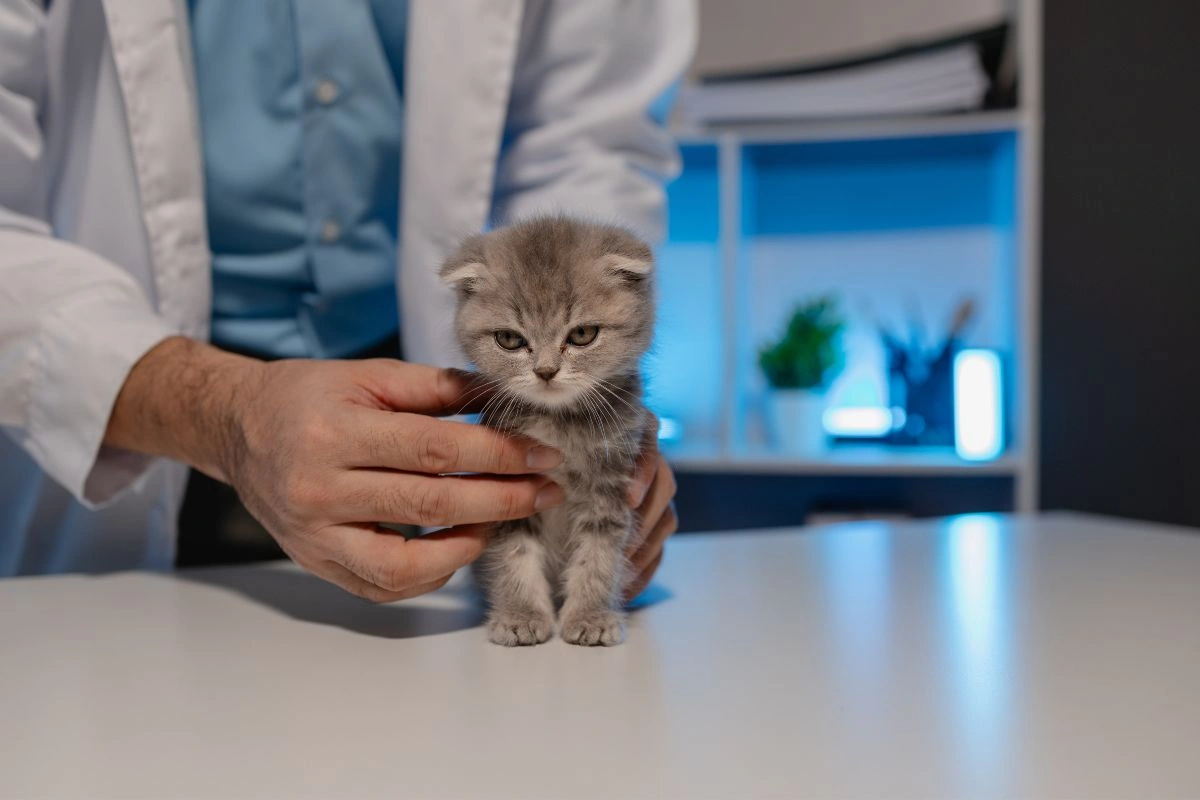
- Physical Exam: The vet will check the eyes, ears, teeth, heart, and lungs. They will also palpate the abdomen and check the coat for fleas.
- FeLV/FIV Testing: If not already done, your vet will likely recommend a blood test for Feline Leukemia and Feline Immunodeficiency Virus.
- Vaccinations: Depending on age (usually starting at 6-8 weeks), your kitten may receive their core vaccines (FVRCP).
- Parasite Prevention: You will likely leave with a dose of flea and tick prevention and a deworming treatment.
5. Handling the Drive
Cats are sensitive to motion and sound. To make the car ride easier:
- Secure the Carrier: Place the carrier on the floor behind the passenger seat or secure it with a seatbelt. A sliding carrier can terrify a kitten.
- Keep it Quiet: Avoid loud music. Speak in low, soothing tones.
- Cover It: Draping a light towel over the carrier can reduce visual stimulation and help them feel hidden and safe.
Preparation is the antidote to panic. By acclimating your kitten to their carrier, gathering your paperwork, and knowing what to expect, you are advocating for your pet’s well-being. This first visit is the beginning of a partnership between you and your veterinary team to ensure your kitten lives a long, nine-lived life.
Take a deep breath—you’ve got this!
Conveniently located in Farmington, if you are searching for a “veterinarian near me” who specializes in gentle, fear-free kitten care, we are here to help.
The experienced team at Farmington Veterinary Hospital can’t wait to meet your new bundle of joy and get them started on the path to wellness.
Frequently Asked Questions:
Q1: How much does the first kitten vet visit cost?
Ans: Costs vary by location, but generally, you should budget for the exam fee, vaccinations, deworming, and fecal testing. It is often more expensive than a standard check-up due to the initial diagnostics required.
Q2: Do indoor kittens really need deworming?
Ans: Yes. Most kittens are born with worms passed from their mother or acquire them through milk. Even if your cat stays indoors, these parasites must be treated to prevent growth and transmission to humans.
Q3: Can I hold my kitten during the exam?
Ans: It depends on the veterinarian and the procedure. Often, vets and technicians prefer to hold the kitten themselves using safe restraint techniques to prevent scratching or biting if the kitten gets startled.
Q4: What if my kitten vomits in the car?
Ans: Motion sickness is common. If this happens, clean it up calmly without scolding. For future visits, withhold food for about an hour before travel, or ask your vet about anti-nausea options if it becomes a chronic issue.
Q5: At what age do kittens get their rabies shot?
Ans: The rabies vaccination is typically given between 12 and 16 weeks of age. It is a legal requirement in most states, even for indoor-only cats.
Q6: How do I collect a stool sample from a kitten?
Ans: Use a clean plastic spoon or a turned-inside-out poop bag to grab a small, fresh sample from the litter box. It doesn’t need to be the whole movement—a piece the size of a walnut is usually sufficient.